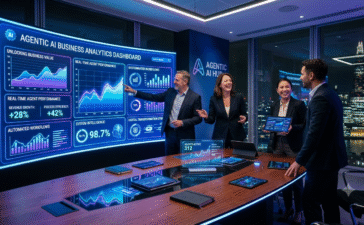
Artificial intelligence is no longer a futuristic concept reserved for large technology companies. Today, businesses of all sizes are using AI-powered tools to improve productivity, simplify operations, and help employees work more efficiently. As organizations continue facing increasing operational complexity and growing customer expectations, AI is becoming a practical solution for creating smarter and more agile workplaces.
Employees often spend a large part of their day handling repetitive tasks such as responding to emails, organizing reports, attending meetings, managing workflows, and searching for information. These manual activities reduce productivity and limit the time available for innovation and strategic work.
AI-powered systems help businesses solve these challenges through intelligent automation, real-time insights, and smarter collaboration tools. Rather than replacing human expertise, AI supports employees by improving workflow efficiency and enabling faster decision-making.
As digital transformation accelerates, organizations that adopt AI strategically are building more productive and future-ready business environments.
The Shift Toward AI-Powered Productivity
Modern workplaces generate massive amounts of operational and customer data daily.
Organizations commonly struggle with:
- Repetitive administrative tasks
- Communication inefficiencies
- Slow reporting processes
- Information overload
- Difficulty managing distributed teams
Traditional workflows often rely heavily on manual effort, which slows productivity and creates operational bottlenecks.
AI-powered tools improve workplace efficiency by automating repetitive workflows and helping employees access information more quickly.
One of AI’s biggest advantages is speed. AI systems can analyze information rapidly and generate actionable insights that improve operational responsiveness.
Businesses that embrace AI are seeing improvements in productivity, collaboration, and customer engagement.
Key Areas Where AI Creates Smarter Workflows
Intelligent Task Automation
AI is highly effective at automating repetitive operational activities.
Businesses use AI to automate:
- Email drafting and responses
- Scheduling and calendar management
- Report generation
- Data organization
- Workflow approvals
Automation reduces manual workloads and improves consistency across operations.
Employees can focus more on strategic initiatives and creative problem-solving.
Smarter Team Collaboration
Remote and hybrid work environments have increased the need for efficient collaboration systems.
AI-powered collaboration platforms help organizations:
- Summarize meetings automatically
- Generate action items and follow-ups
- Improve workflow visibility
- Centralize organizational knowledge
These capabilities improve communication efficiency and reduce delays in project coordination.
AI also enables employees to access operational information more efficiently, improving teamwork across departments.
Faster Business Insights and Analytics
Organizations generate large amounts of operational and customer data every day.
AI-powered analytics systems help businesses:
- Detect operational inefficiencies
- Analyze customer behavior
- Forecast business trends
- Generate strategic recommendations
These insights improve decision-making speed and planning accuracy.
Leaders can respond more effectively to changing business conditions and market demands.
Improving Customer Experiences
Customer expectations continue evolving rapidly.
Businesses use AI-powered systems to improve engagement through:
- Intelligent virtual assistants
- Automated support systems
- Personalized recommendations
- Faster customer response workflows
These capabilities improve customer satisfaction while reducing workloads for support teams.
AI-powered engagement also enables businesses to deliver more personalized and consistent customer experiences.
Supporting Innovation and Creativity
AI is becoming a valuable productivity assistant for creative and strategic work.
Employees can use AI tools to:
- Generate reports and presentations
- Brainstorm business ideas
- Create marketing content
- Analyze industry and market trends
This accelerates innovation while improving operational productivity.
AI helps employees spend less time on manual preparation and more time on high-value work.
Why Human Skills Still Matter
Although AI improves productivity, human expertise remains essential.
AI performs best in areas such as:
- Automation
- Data processing
- Workflow optimization
- Information analysis
Humans remain critical for:
- Leadership and communication
- Creativity and innovation
- Strategic thinking
- Ethical judgment and empathy
The most successful organizations combine AI capabilities with human strengths to create smarter and more adaptive workplaces.
This human + AI collaboration model enables employees to focus on meaningful and impactful contributions.
Challenges in AI Adoption
Businesses must address several challenges during AI implementation.
Workforce Readiness
Employees may require AI training and onboarding support.
Data Security and Privacy
Organizations must ensure sensitive business and customer information remains protected.
Integration Complexity
Legacy systems may require modernization to support AI-powered workflows.
Organizational Change Management
AI adoption often requires operational and cultural adjustments across teams.
A phased implementation strategy helps organizations improve adoption success and reduce operational risks.
Best Practices for Smarter AI Adoption
Businesses can maximize AI productivity benefits by:
- Identifying repetitive workflows suitable for automation
- Starting with high-impact operational use cases
- Providing workforce training and support
- Establishing governance and security frameworks
- Continuously monitoring AI performance and outcomes
Cross-functional collaboration between leadership, IT teams, and operational departments is critical for long-term success.
Conclusion
AI is transforming everyday business operations by improving productivity, automating workflows, accelerating decision-making, and strengthening collaboration. Organizations that adopt AI strategically are building smarter and more agile workplaces capable of adapting to evolving business demands.
As the future of work continues evolving, businesses that combine AI-powered productivity tools with human expertise will be better positioned to improve efficiency, strengthen innovation, and drive sustainable long-term growth.