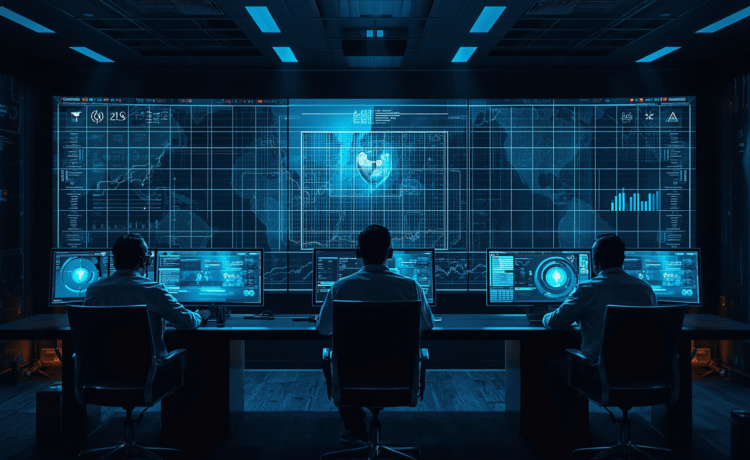
Artificial intelligence is transforming nearly every aspect of cybersecurity, from threat detection and incident response to vulnerability management and risk analysis. Organizations are increasingly investing in AI-powered security tools to improve efficiency and address growing cyber threats. While these technologies provide significant advantages, successful cybersecurity operations still depend heavily on human expertise. AI may process information faster than humans, but it cannot fully replace the judgment, creativity, and contextual understanding that security professionals bring to complex situations.
As Security Operations Centers adopt more advanced technologies, the focus is shifting toward human-AI collaboration rather than complete automation. Organizations are discovering that the most effective security strategies combine the strengths of intelligent systems with the experience and decision-making capabilities of skilled analysts. This balance is creating more resilient and adaptable security operations capable of addressing today’s rapidly evolving threat landscape.
Why Human Expertise Remains Critical
Cybersecurity is not simply a technical challenge—it is also a business challenge. Security incidents often involve operational, financial, legal, and reputational considerations that require careful evaluation. Human analysts understand these broader implications and can make informed decisions based on organizational priorities.
While AI excels at detecting anomalies and identifying potential threats, it lacks the ability to fully understand business context. Security professionals can interpret findings, investigate complex attack scenarios, and determine the most appropriate response actions. Their expertise is especially valuable during sophisticated incidents that require critical thinking and strategic planning.
Organizations that rely solely on automation may struggle when facing unique or highly targeted attacks. Human judgment remains an essential component of effective cybersecurity defense.
Enhancing Human Capabilities Through AI
Rather than replacing analysts, AI serves as a powerful tool that enhances their capabilities. Automated systems can handle repetitive tasks such as log analysis, alert prioritization, and threat classification, allowing analysts to focus on higher-value activities.
AI-powered platforms also improve visibility by correlating information from multiple security sources and presenting actionable insights. This enables security teams to investigate incidents more efficiently and respond to threats with greater confidence.
By reducing operational workloads and providing better intelligence, AI helps security professionals become more effective while improving overall security outcomes. The result is a more productive and resilient security operation that leverages the strengths of both people and technology.
Key Benefits of Human-AI Collaboration
- Improved threat detection accuracy
- Faster incident response times
- Enhanced security visibility
- Reduced analyst workload
- Better decision-making capabilities
- Stronger threat investigation processes
- Increased operational efficiency
- Greater cyber resilience
Conclusion
The future of cybersecurity depends on the successful integration of artificial intelligence and human expertise. While AI provides speed, automation, and analytical capabilities, human professionals deliver the judgment and strategic thinking needed to address complex security challenges.
Organizations that prioritize human-AI collaboration will be better equipped to manage evolving cyber threats, improve operational performance, and build stronger security operations for the future.