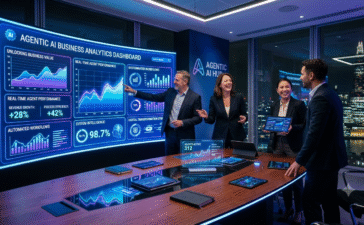
Digital transformation has become a top priority for organizations looking to remain competitive in fast-changing business environments. Companies across industries are adopting cloud technologies, artificial intelligence, automation systems, and advanced analytics platforms to improve efficiency, strengthen customer engagement, and support smarter decision-making. However, managing digital transformation initiatives successfully often requires organizations to modernize workflows and improve operational agility.
AI agents are becoming one of the most important technologies helping businesses achieve these goals. These intelligent systems are designed to automate tasks, analyze information, make contextual decisions, and continuously improve through machine learning. Unlike traditional automation platforms that rely heavily on predefined rules, AI agents can adapt dynamically to operational changes and support more advanced enterprise workflows.
Organizations are increasingly using AI agents to improve workflow management, customer support, IT operations, cybersecurity monitoring, and business intelligence. As digital transformation continues accelerating across industries, AI agents are helping enterprises build more scalable, adaptive, and future-ready operational environments.
The Growing Role of AI Agents in Digital Transformation
Modern businesses generate enormous amounts of operational and customer data daily. Managing workflows manually often slows productivity and reduces operational visibility.
AI agents help organizations improve:
- Intelligent workflow automation
- Customer engagement and support
- Real-time business analytics
- IT infrastructure management
- Cybersecurity operations
- Operational decision-making
AI-powered systems can process information rapidly while operating continuously, helping businesses improve responsiveness and operational efficiency.
One major advantage of AI agents is their ability to automate repetitive business activities. Employees can focus more on innovation, strategic planning, and customer relationship management instead of manual administrative work.
Organizations that successfully integrate AI agents into their operations often improve agility, productivity, and scalability.
How AI Agents Improve Business Operations
AI agents are transforming enterprise operations by improving workflow coordination and operational visibility. Intelligent systems can analyze business trends, identify process inefficiencies, and generate predictive insights that support faster and more informed decision-making.
Businesses are also using AI agents to improve customer experiences through AI-powered chat systems, virtual assistants, intelligent recommendations, and automated support workflows. These capabilities improve service quality while reducing support costs and response times.
In cybersecurity and IT management, AI agents help organizations monitor infrastructure performance, detect threats, automate incident response, and improve operational resilience. Intelligent monitoring systems reduce downtime risks while strengthening business continuity.
AI-powered analytics also help leaders respond more effectively to changing market conditions and operational challenges by providing real-time insights across departments.
Challenges Businesses Must Consider
Although AI agents provide significant operational benefits, organizations must address important implementation challenges.
Data Privacy and Security
Sensitive operational and customer information must remain protected.
Workforce Readiness
Employees may require AI training and onboarding support.
Legacy Infrastructure Limitations
Older systems may require modernization to support AI-powered workflows.
Responsible AI Governance
Organizations should establish ethical AI usage and oversight frameworks.
A phased implementation strategy helps organizations improve long-term adoption success while minimizing operational risks.
Conclusion
AI agents are becoming essential for successful digital transformation by improving automation, strengthening customer engagement, accelerating decision-making, and optimizing enterprise operations. Organizations that strategically adopt AI-powered systems are building smarter and more resilient digital environments capable of supporting long-term growth and innovation.
As AI technologies continue evolving, businesses that combine intelligent automation with strong governance, cybersecurity strategies, and human expertise will be better positioned to achieve sustainable success in increasingly competitive digital markets.